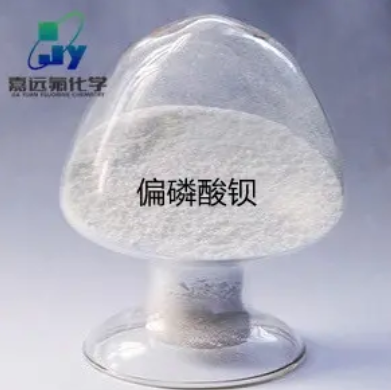
Low Iron 99.99% Purity Barium Metaphosphate Glass Additive
CAS 13762-83-9 · Measured purity 99.99% · Fe 2.5 ppm · Loss on ignition 0.31%
SEO Snapshot
SEO Title
Low Iron 99.99% Barium Metaphosphate for Optical Glass and Ceramics
Meta Description
Barium Metaphosphate with 99.99% measured purity, iron at 2.5 ppm and loss on ignition of 0.31%. A low-colour additive for optical glass, ceramics and enamel.
URL Slug
barium-metaphosphate-99-99-purity-low-iron
Barium Metaphosphate, standard high-purity grade — reference image BaO6P2
Product Summary
Barium Metaphosphate (CAS 13762-83-9) is supplied by Changzhou Jiayuan Chemical Co., Ltd. as a high-purity functional additive for glass, ceramic, enamel and paper systems. Measured purity reaches 99.99% against a specification of ≥99.95%, and the transition-metal profile is tightly controlled: iron is held at 2.5 ppm while cobalt, chromium, titanium, copper, manganese, nickel and vanadium are each below 1 ppm. Loss on ignition measures 0.31% inside a 0.5% limit. The material is insoluble in water and slowly soluble in acid, giving formulators predictable behaviour during slurry preparation and wet mixing.
Key Features
Low Iron and Low Chromium
Fe at 2.5 ppm with Cr below 1 ppm prevents colouring in optical glass and special ceramics, protecting transmittance and batch-to-batch colour consistency.
Transition Metals Below 1 ppm
Co, Ti, Cu, Mn, Ni and V are each controlled below 1 ppm, reducing potential impact on insulation performance in electronic-grade applications.
Loss on Ignition 0.31%
Low mass loss at high temperature limits the risk of pores and surface defects caused by volatiles — relevant for dense precision ceramics and optical glass.
Stable in High-Temperature Firing
Good thermal and chemical stability means the additive is not prone to decomposition or volatilisation during glass, ceramic and enamel firing, supporting hardness and corrosion resistance.
Controlled Dissolution Behaviour
Insoluble in water and only slowly soluble in acid, it does not dissolve rapidly during slurry preparation or wet mixing, helping form uniform glass or glaze structures.
Technical Specifications
Parameter
Specification / Measured Value
Product name
Barium Metaphosphate
CAS number
13762-83-9
Purity (specification)
≥99.95%
Purity (measured)
99.99%
Iron (Fe)
2.5 ppm (controlled below 2.5 ppm)
Cobalt (Co)
<1 ppm
Chromium (Cr)
<1 ppm
Titanium (Ti)
<1 ppm
Copper (Cu)
<1 ppm
Manganese (Mn)
<1 ppm
Nickel (Ni)
<1 ppm
Vanadium (V)
<1 ppm
Loss on ignition
0.31% (controlled within 0.5%)
Solubility
Insoluble in water; slowly soluble in acid
Thermal / chemical behaviour
Stable; not prone to decomposition or volatilisation during high-temperature firing
Storage
Ventilated, low-temperature, dry warehouse; separated from oxidants and food additives
Values above reflect the published specification and measured batch data for this grade.
Models and Options
One standard high-purity grade is offered; the selectable option is packaging format.
Plastic Woven Bags
Standard packaging option, selected according to customer usage volume and handling practice.
Aluminium Foil Bags
Moisture and oxygen barrier properties, suitable for humidity-sensitive storage and transport environments.
Fiber Drums
Facilitate stacking and mechanical handling where drum-based logistics are preferred.
Materials and Structure
Barium Metaphosphate is an inorganic barium-phosphate compound supplied as a high-purity solid additive. Its structure gives a combination of properties that matters in furnace processes: good thermal and chemical stability, no tendency to decompose or volatilise during high-temperature firing of glass, ceramics and enamel, and a slow dissolution rate in acid with no solubility in water. Because the material does not dissolve rapidly during slurry preparation or wet mixing, local concentration unevenness is avoided and a more uniform glass or glaze structure can be formed. Controlled impurity chemistry keeps colouring elements out of the batch while the low loss on ignition limits volatile-driven porosity.
Applications
Optical glassSpecial ceramicsEnamelElectronic-grade insulation materialsPaper bleaching and deinking aid
Optical Glass and Special Ceramics
Low iron and low chromium content prevents colouring, supporting transmittance and colour consistency in the finished body.
Glass, Ceramic and Enamel Firing
Acts as a functional additive that improves hardness and corrosion resistance while remaining stable through high-temperature firing.
Paper Industry
Also used as a bleaching and deinking aid, helping remove ink impurities from pulp.
Customization
Packaging format is adjusted on request, with recommendations made against customer usage volume, storage conditions and transportation method.
Detailed technical reports including multi-element impurity testing results are provided, so buyers can complete incoming inspection without additional testing.
Storage guidance is supplied with the shipment: ventilated, low-temperature, dry warehouse, separated from oxidants and food additives, preventing moisture caking or cross-contamination.
FAQ
What purity and impurity limits are confirmed for this grade?
Measured purity is 99.99% against a specification of no less than 99.95%. Iron measures 2.5 ppm, and cobalt, chromium, titanium, copper, manganese, nickel and vanadium are each below 1 ppm.
Is a multi-element impurity report supplied with the material?
Yes. Detailed technical reports including multi-element impurity testing results are provided, allowing purchasers to complete incoming inspection comparison without extra testing.
How does its solubility affect slurry preparation?
The material is insoluble in water and only slowly soluble in acid, so it does not dissolve rapidly during slurry preparation or wet mixing. This avoids local concentration unevenness and helps form a uniform glass or glaze structure.
Why does loss on ignition matter for my process?
Loss on ignition is 0.31% within a 0.5% limit. Lower mass loss during high-temperature processing reduces the risk of pores or surface defects caused by volatiles, which is critical for precision ceramics or optical glass requiring high density and low porosity.
Which packaging formats are available?
Standard packaging includes plastic woven bags, aluminium foil bags and fiber drums. Aluminium foil bags provide moisture and oxygen barrier properties for humidity-sensitive environments, while fiber drums facilitate stacking and mechanical handling.
How should the material be stored on arrival?
Store in a ventilated, low-temperature, dry warehouse, separated from oxidants and food additives, to prevent moisture caking or cross-contamination.
Which industries use this additive?
Optical glass, special ceramics, enamel and electronic-grade applications where transition-metal content may affect insulation performance, plus the paper industry as a bleaching and deinking aid.
 ✓ Verified Elite Supplier