{{ variable.name }}
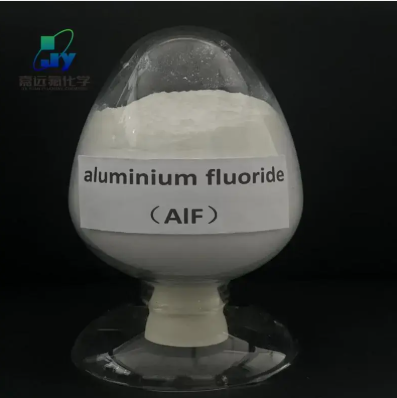
An anhydrous aluminum fluoride with a typical assay of 99.95% and iron held at 2.2 ppm, supplied as an electrolysis flux and bath adjuster, and used in ceramic and enamel glazes, non-ferrous metal smelting and fermentation control.
This aluminum fluoride is an anhydrous inorganic fluorine salt produced through an advanced process and backed by a proprietary production route and quality management system. The grade documented here is specified above 99.9% purity, with a typical assay of 99.95%. Impurity control is tight on the elements that matter most in molten electrolyte: iron is held under 5 ppm (2.2 ppm typical), while cobalt, chromium, titanium, copper, manganese, nickel and vanadium are each specified below 10 ppm and typically below 1 ppm. Burn weight loss is specified below 0.5%, with 0.37% typical.
In aluminum electrolysis the material works as a flux and bath adjuster: it lowers the melting point of alumina, improves electrolyte conductivity and helps hold the required molecular ratio. Buyers also use it in ceramic and enamel glazes, as a flux in copper and magnesium smelting, and as an inhibitor of side fermentation in alcohol production.
Specification is above 99.9% purity, with 99.95% typical. Higher active content per tonne means less inert material entering the bath and fewer dosing corrections.
Iron is specified under 5 ppm and measured at 2.2 ppm typical. Co, Cr, Ti, Cu, Mn, Ni and V each stay below 10 ppm (typically <1 ppm), limiting contamination of the electrolyte and the metal being produced.
The purity and low impurity profile are stated to reduce hydrolysis loss, improve yield, lower production cost and cut fluoride emissions and flue gas fluoride concentration.
The anhydrous material is reported to improve current efficiency by more than 0.65 percentage points and to reduce DC power consumption by 95 kWh per tonne of aluminum — about 50 million kWh per year at a 500,000 t/y smelter.
Burn weight loss is 0.37% against a 0.5% limit, and every impurity is reported against a stated ceiling, so incoming inspection can be checked against defined figures rather than ranges alone.
Supply is supported by a proprietary production process, a quality management system, a warehouse in Inner Mongolia and a dedicated vehicle dispatch and transport system.
| Parameter | Specification limit | Typical value |
|---|---|---|
| Purity | >99.9% | 99.95% |
| Iron (Fe) | <5 ppm | 2.2 ppm |
| Cobalt (Co) | <10 ppm | <1 ppm |
| Chromium (Cr) | <10 ppm | <1 ppm |
| Titanium (Ti) | <10 ppm | <1 ppm |
| Copper (Cu) | <10 ppm | <1 ppm |
| Manganese (Mn) | <10 ppm | <1 ppm |
| Nickel (Ni) | <10 ppm | <1 ppm |
| Vanadium (V) | <10 ppm | <1 ppm |
| Burn weight loss | <0.5% | 0.37% |
| CAS number | 7784-18-1 | — |
Figures as stated in the supplier product data. Test methods and certificate of analysis format are confirmed per order.
The product is anhydrous aluminum fluoride, not a hydrate, and is made by an advanced process route. Its performance in the cell depends on what is left out of the crystal as much as on the aluminum fluoride content itself, so the specification is written around ceilings for iron and for the transition metals Co, Cr, Ti, Cu, Mn, Ni and V, with typical values reported alongside.
Because the material is supplied in anhydrous form, packaging structure is built around moisture protection: moisture-proof aluminum foil bags are offered alongside plastic woven bags and reinforced cardboard drums. Buyers receive technical guidance covering protection during transport, ventilation requirements at the point of use, and residue recycling.
Packaging is selected from plastic woven bags, moisture-proof aluminum foil bags and reinforced cardboard drums according to how the material will be stored and fed at your plant. Technical guidance on safe storage and use is provided with the shipment, covering transport protection, ventilation requirements and residue recycling. For buyers sourcing several fluorine chemicals on one order, the same supply chain supports long-term, supporting supply of related inorganic fluorine products — sodium fluoride, potassium fluoride, magnesium fluoride and calcium fluoride — so multi-level procurement can be consolidated. Specific packing weights, documentation and delivery schedules are agreed per order.
The specification is >99.9% purity with a typical assay of 99.95%. Iron is specified <5 ppm (2.2 ppm typical); Co, Cr, Ti, Cu, Mn, Ni and V are each <10 ppm, typically <1 ppm; burn weight loss is <0.5% (0.37% typical).
Per the product data, the high purity and low impurity content reduce hydrolysis loss, improve yield, lower production cost and reduce fluoride emissions and flue gas fluoride concentration.
The anhydrous material is reported to improve current efficiency by more than 0.65 percentage points while reducing DC power consumption by 95 kWh per tonne of aluminum — close to 50 million kWh per year for a 500,000 t/y aluminum plant.
Plastic woven bags, moisture-proof aluminum foil bags and reinforced cardboard drums. The choice is normally driven by storage conditions and how the material is charged to the cell or furnace.
Technical guidance on safe storage and use is supplied, including protection during transport, ventilation requirements and residue recycling. Moisture-proof packaging is recommended wherever bags are opened and partly used.
Yes. The supplier maintains long-term supporting supply of related inorganic fluorine chemicals, including sodium fluoride, potassium fluoride, magnesium fluoride and calcium fluoride, which supports multi-level procurement on a single supply relationship.
7784-18-1.
Send your required packaging format, annual or trial volume and destination port for a quotation.
Contact: jane · Email: janeyuan@czjyhg.com · Tel: +86 15366800998 · WhatsApp: +86 13862689212
Changzhou Jiayuan Chemical Co., Ltd. · 13th Floor, Building 2, Jinsha Technology Financial Center, Jintan District, Changzhou City, Jiangsu Province, China